

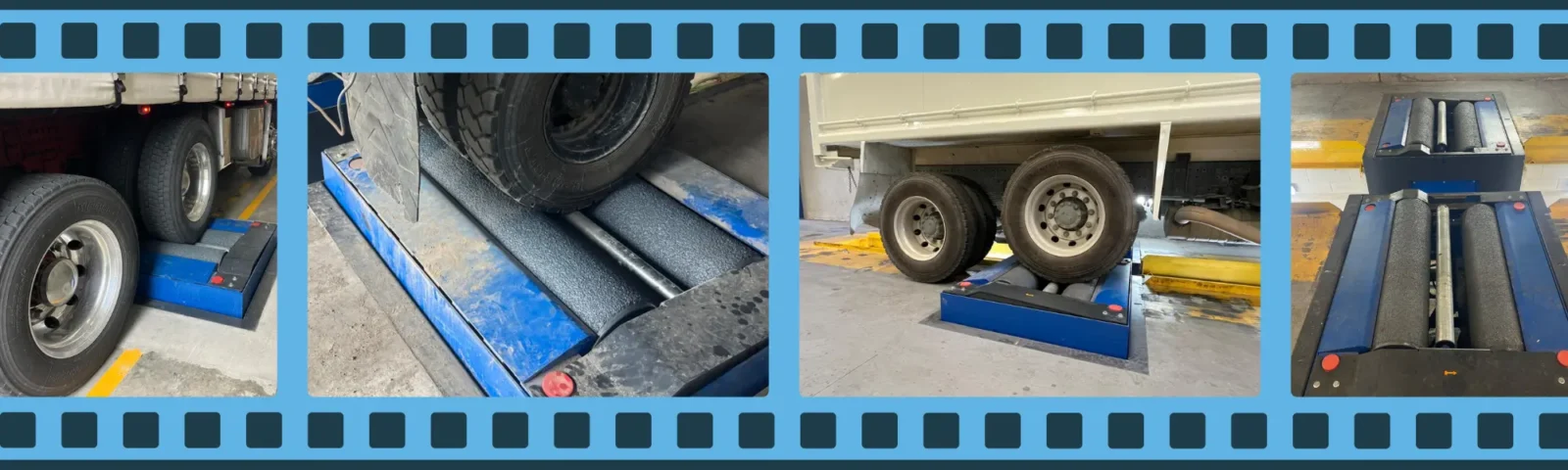
Accurate brake testing is one of the most critical safety checks performed on heavy vehicles anywhere in the world. In New Zealand, the industry recognised early that true accuracy can only be achieved when brake testing reflects real-world operating conditions.
That is why load simulation has been mandatory for heavy-vehicle Certificate of Fitness (COF) brake testing in New Zealand for many years. While other regions are only now moving toward similar requirements, New Zealand workshops, inspection stations, and fleet operators have been working to this standard for decades.
This article explains what load simulation is, why it matters for accurate heavy-vehicle brake testing, and how New Zealand’s approach—supported by modern lifting-bed technology such as that used in the Ryme Worldwide FRU 4 truck roller brake tester—has helped set a benchmark that international markets are increasingly following.
Why New Zealand’s approach matters
Heavy vehicles in New Zealand operate in demanding conditions, often carrying significant loads across varied terrain. From an early stage, regulators and industry recognised that brake testing needed to account for these realities.
Testing brakes on an unloaded vehicle can identify obvious faults, but it does not reliably represent how a braking system performs when the vehicle is doing its job. New Zealand’s mandatory use of load simulation reflects a clear principle: brake test results should mirror real-world braking behaviour as closely as possible.
This philosophy underpins New Zealand’s reputation for rigorous, practical heavy-vehicle safety standards and has positioned the country as a leader in accurate brake testing methodology.
What is load simulation?
Load simulation is a brake-testing method that applies a controlled vertical force to the vehicle axle during testing. This additional force replicates the effect of vehicle weight, allowing braking performance to be measured under conditions that closely resemble real-world operation.
In modern roller brake testers, load simulation is achieved using an integrated lifting-bed system. During the brake test, the lifting bed engages to apply increased normal force to the rollers, creating realistic tyre-to-roller interaction without the need to physically load the vehicle.
The result is a brake test that reflects how the vehicle behaves on the road when under load, rather than how it performs when empty.
The limitations of unloaded brake testing
In real-world service, heavy vehicles rarely operate without load. Axle weights, suspension compression, tyre deformation, and driveline behaviour all influence braking performance.
Traditional roller brake testing without load simulation measures braking force while the vehicle is effectively unloaded. While this can reveal major defects, it may also result in:
- Brake-force readings that do not reflect on-road performance
- Reduced repeatability between tests
- Brake imbalances that only appear under load going undetected
- Lower confidence in marginal or borderline results
As braking systems have evolved, New Zealand’s testing standards have evolved with them, reinforcing the importance of load-simulated testing.
Why load simulation delivers more accurate results
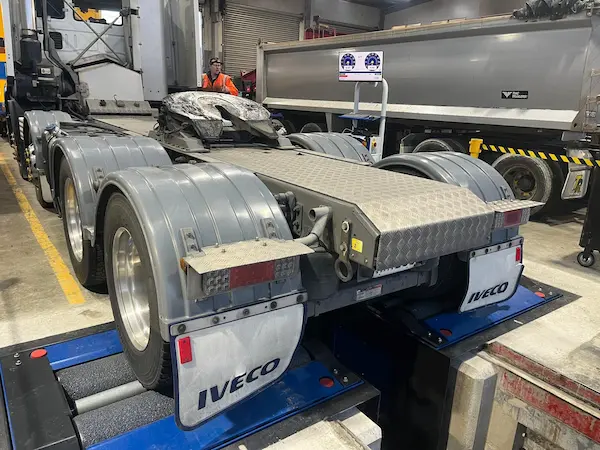
Real-world braking behaviour
Applying load during testing allows tyres to generate realistic grip levels and suspension components to respond as they would in service. This produces brake-force readings that align closely with laden driving conditions.
Repeatable, defensible testing
Load simulation applies a controlled, measurable force during every test, reducing variability and improving consistency. This repeatability is critical for workshops and inspection stations that rely on dependable results.
Earlier identification of brake imbalance
Some brake imbalances only become apparent when a vehicle is under load. Load-simulated testing helps identify left-to-right or axle-to-axle discrepancies that might otherwise remain hidden.
Greater confidence across the industry
For workshop owners, fleet operators, and inspection stations, load-simulated testing provides confidence that brake performance figures genuinely reflect the vehicle’s braking capability.
Load simulation and COF testing in New Zealand
In New Zealand, load simulation is mandatory for heavy-vehicle brake testing carried out as part of Certificate of Fitness inspections. This long-standing requirement reflects a practical understanding that unloaded testing alone is insufficient for assessing braking performance on heavy vehicles.
By embedding load simulation into COF brake testing, New Zealand has ensured that results are accurate, realistic, and repeatable. This approach aligns closely with the safety principles promoted by NZTA, which emphasise effective braking systems and robust testing as fundamental to heavy-vehicle road safety.
As other regions move toward similar requirements, New Zealand’s experience demonstrates the value of setting high standards early.
Lifting-bed load simulation: supporting a proven standard
Not all load-simulation systems are the same. Modern lifting-bed technology offers a refined, efficient way to apply controlled load during brake testing.
The Ryme Worldwide FRU 4 roller brake tester is a strong example of equipment designed to support New Zealand’s established testing standard. Its integrated lifting-bed system enables:
- Accurate, repeatable load application
- Smooth, controlled operation during testing
- Clear, consistent brake-force measurements
- Compatibility with a wide range of heavy vehicles
By integrating load simulation directly into the brake tester, lifting-bed systems support reliable testing without adding unnecessary complexity to workshop operations.
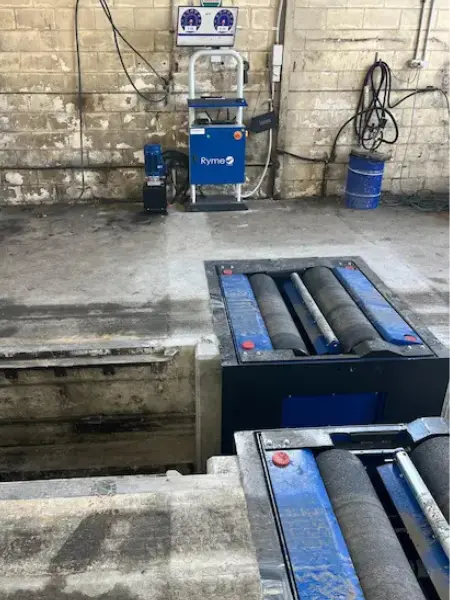
Why pit-based installations complement load simulation
Load-simulated brake testing is particularly well suited to pit-based workshop layouts, which are common throughout New Zealand’s heavy-vehicle service sector.
When installed alongside a prefabricated steel inspection pit, a lifting-bed truck roller brake tester allows technicians to:
- Maintain safe, ergonomic access beneath the vehicle
- Integrate brake testing into broader inspection and servicing workflows
- Optimise space within the workshop
- Support efficient, end-to-end compliance checks
This combination creates a future-ready testing lane that reflects the practical realities of heavy-vehicle servicing in New Zealand.
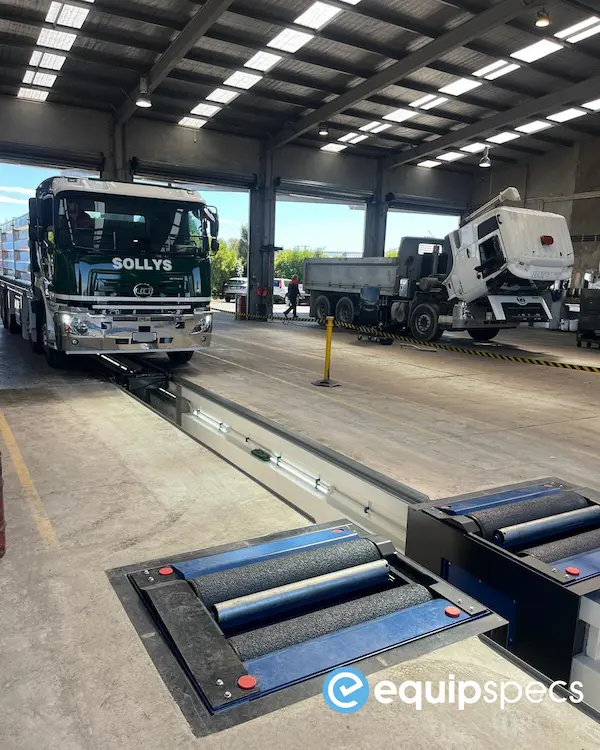
Who benefits from New Zealand’s load-simulation standard?
New Zealand’s approach delivers benefits across the industry:
- Workshop owners and managers gain reliable, repeatable brake test results
- Fleet operators benefit from improved safety outcomes and clearer maintenance insights
- Inspection and testing stations achieve consistent, defensible measurements aligned with COF requirements
As international markets increasingly adopt load-simulation requirements, New Zealand’s long-standing experience provides a proven reference point.
A benchmark others are now following
Load simulation has been a cornerstone of accurate heavy-vehicle brake testing in New Zealand for many years. Rather than adapting to new requirements, New Zealand workshops already operate to a standard that prioritises realism, repeatability, and safety.
Load-simulated roller brake testers such as the Ryme Worldwide FRU 4—particularly when integrated with pit-based infrastructure—are designed to support this benchmark, delivering dependable test data that reflects how heavy vehicles actually perform on the road.
EquipSpecs supplies and installs advanced heavy-vehicle brake testing equipment across New Zealand, supporting workshops with fit-for-purpose solutions aligned with COF requirements and designed for accuracy, safety, and long-term performance.
Related Reading
Why Roller Brake Testers Are the Gold Standard for Vehicle Safety
https://equipspecs.co.nz/index.php/2025/07/15/why-roller-brake-testers-are-the-gold-standard/
A detailed look at why modern roller brake testers deliver the accuracy, repeatability, and safety outcomes required for heavy-vehicle brake testing.
Prefabricated Steel Inspection Pits in New Zealand: Looking Ahead to 2026
https://equipspecs.co.nz/index.php/2025/12/05/prefabricated-steel-inspection-pits-nz-2026/
An overview of how NZ-made prefabricated steel inspection pits support safe, efficient heavy-vehicle servicing and compliance-focused workshop layouts.
9m Pit Extension and FRU 4 Brake Tester Installation
https://equipspecs.co.nz/index.php/2025/11/17/9m-pit-extension-fru4-brake-tester-installation/
A real-world example of a pit-based roller brake tester installation supporting integrated brake testing and inspection workflows.