Heavy vehicle workshops across New Zealand rely on accurate brake testing equipment to ensure commercial vehicles meet safety and compliance requirements. As fleets evolve and axle loads increase, many operators are reassessing whether their inspection equipment provides the capacity and reliability needed for modern heavy vehicles.
Workshops planning inspection lanes often evaluate several truck roller brake tester configurations depending on axle capacity, vehicle type, and regulatory requirements. While many installations perform reliably with standard capacity systems, some facilities benefit from equipment designed to handle heavier loads.
For workshops supporting larger vehicles or planning inspection lanes with long-term capability in mind, a high-capacity roller brake tester may offer important advantages.
The Changing Demands of Heavy Vehicle Workshops
The heavy transport sector in New Zealand continues to evolve. Commercial vehicles are increasingly specialised, fleets are becoming more diverse, and workshop facilities are often expected to service a wide range of vehicle configurations.
As a result, workshop operators and inspection facilities are placing greater emphasis on equipment that not only meets today’s requirements but also supports future operational needs.
A roller brake tester for heavy vehicles provides a controlled and repeatable method of measuring brake performance. By accurately measuring braking force across each axle, technicians can verify that vehicles meet safety standards.
For workshops operating COF inspection lanes or servicing commercial fleets, selecting the right brake testing equipment is an important part of maintaining safe and efficient operations.
Heavy Vehicle Roller Brake Testers in New Zealand Workshops
Modern roller brake testers for heavy vehicles are designed to provide accurate brake force measurement across a wide range of axle loads, supporting the safety and compliance requirements of New Zealand’s commercial vehicle fleet.
Many workshops operate successfully with brake testers rated to 20 tonnes per axle, which comfortably supports a large portion of the commercial vehicle market.
However, some operations benefit from higher-capacity systems that provide additional operational flexibility for heavier vehicles or specialised transport equipment.
Understanding when that additional capacity is beneficial is an important consideration when designing or upgrading a heavy vehicle inspection lane.
When 20 Tonnes May Not Be Enough
Brake testers rated to 20 tonnes per axle remain suitable for many heavy vehicle workshops and COF inspection environments. Systems such as the widely used FRU 4 roller brake tester have become established solutions for a large number of inspection facilities across New Zealand.
However, certain workshop environments may benefit from higher-capacity brake testing equipment.
This may include workshops that:
• Service heavy haul or specialised commercial vehicles
• Support large or diverse fleet operations
• Are planning new COF inspection lanes designed for long-term capability
• Want to ensure their equipment can accommodate future fleet developments
In these cases, installing a higher-capacity brake tester can provide additional operational flexibility and help ensure the inspection facility remains suitable as vehicle requirements evolve.
Why Axle Capacity Matters in Brake Testing
Axle capacity is one of the most important design parameters of a roller brake tester. It determines the maximum load the equipment can safely accommodate while maintaining accurate and repeatable measurement.
When testing heavy commercial vehicles, the braking forces generated during testing can be substantial. Equipment designed to operate at higher axle loads ensures these forces can be measured reliably without placing unnecessary stress on the testing system.
High-capacity brake testers are typically engineered with robust construction, precision measurement systems, and heavy-duty roller assemblies designed for demanding workshop environments.
For operators planning inspection lanes that will serve heavy vehicles for many years, these factors are often considered alongside compliance requirements and long-term facility planning when selecting brake testing equipment.
The Role of the FRU 15 Truck Roller Brake Tester
For workshops requiring additional capacity, the Ryme Worldwide FRU 15 truck roller brake tester provides a high-capacity solution designed for demanding heavy vehicle applications.
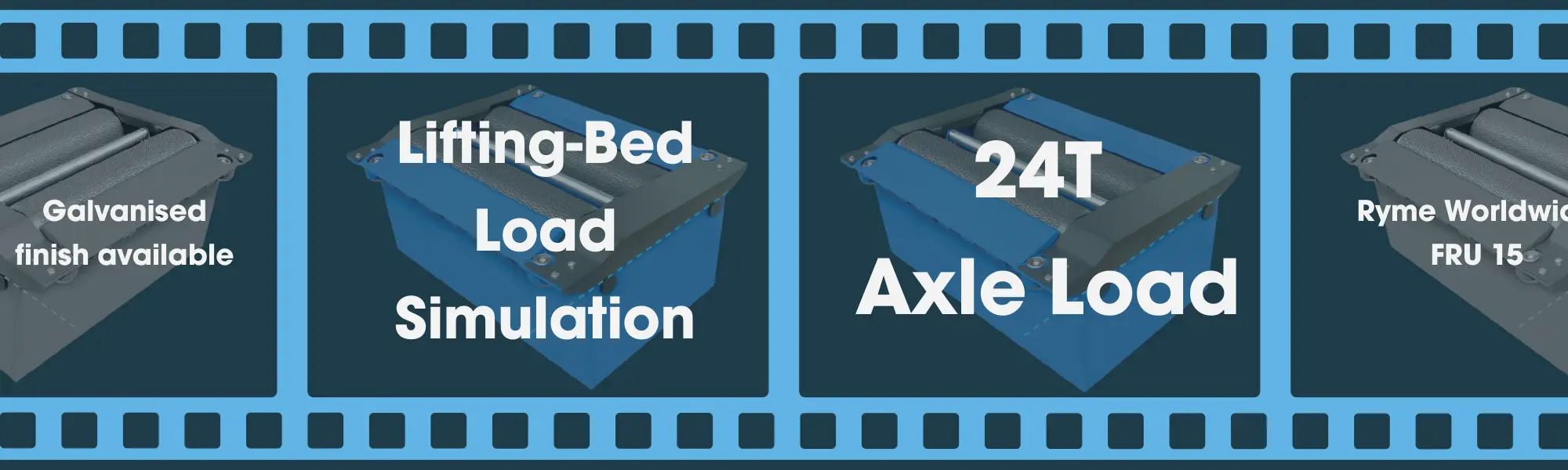
Supporting axle loads of up to 24 tonnes, the FRU 15 offers increased capability for facilities that regularly service larger or specialised vehicles, while maintaining the precision measurement required for reliable brake performance testing.
Key features of the FRU 15 include:
• 24-tonne axle load capacity for heavy commercial vehicle testing
• Precision strain-gauge measurement system for accurate brake force analysis
• High-traction rollers engineered for heavy vehicle tyres
• Robust construction designed for high-demand workshop environments

For facilities planning new inspection lanes or upgrading existing equipment, the FRU 15 provides an option where higher axle capacity is required.
FRU 4 vs FRU 15: Choosing the Right Brake Testing System
While higher-capacity brake testers offer advantages in certain applications, they are not automatically necessary for every workshop.
The FRU 4 roller brake tester, with a 20-tonne axle capacity and integrated load simulation, remains an excellent solution for many heavy vehicle workshops and COF inspection lanes across New Zealand.
For workshops servicing typical commercial vehicle fleets within this capacity range, the FRU 4 continues to provide reliable and accurate brake testing performance.
The FRU 15, by comparison, is designed for applications where higher axle capacity provides operational benefits. This may include facilities working with heavier vehicles, workshops supporting specialised transport operations, or inspection lanes designed with additional capacity for future vehicle developments.
Selecting the right brake tester ultimately depends on the operational requirements of the workshop and the types of vehicles being serviced.
Planning a Future-Ready Inspection Lane
Brake testing equipment is typically just one part of a larger heavy vehicle inspection environment. In many workshops, it operates alongside inspection pits, safety systems, and infrastructure designed to support efficient vehicle testing.
When designing new facilities or upgrading existing inspection lanes, many operators take a long-term view of equipment selection. Installing robust systems with appropriate capacity can help ensure the workshop remains capable of servicing the evolving commercial vehicle fleet.
With more than four decades of experience in heavy vehicle workshop infrastructure, EquipSpecs works closely with transport operators, inspection facilities, and service workshops across New Zealand to design inspection solutions suited to their specific operational needs.
This includes helping operators determine whether a standard-capacity brake tester or a higher-capacity solution, such as the FRU 15, is the most appropriate choice for their facility.
Choosing the Right Brake Testing Capability
Selecting a roller brake tester is an important investment for any heavy vehicle workshop. While many facilities operate effectively with standard capacity systems, some operations benefit from the additional capability provided by higher-capacity equipment.
For workshops servicing heavy commercial vehicles, designing new inspection lanes, or planning facilities with long-term operational flexibility in mind, a high-capacity roller brake tester may offer the additional capability required.
The Ryme Worldwide FRU 15, supplied and supported in New Zealand by EquipSpecs, provides a high-capacity brake testing solution designed for modern heavy vehicle workshop environments.
Frequently Asked Questions: High-Capacity Truck Roller Brake Tester
A high-capacity roller brake tester is designed to measure the braking performance of heavy commercial vehicles with higher axle loads. These systems allow workshops to test vehicles safely and accurately while accommodating heavier transport equipment.
Many heavy vehicle brake testers are rated for around 20 tonnes per axle, which is suitable for a large number of commercial vehicle workshops. However, some inspection facilities require higher-capacity systems to accommodate heavier vehicles or specialised transport equipment.
Workshops may choose a 24-tonne roller brake tester when servicing heavy commercial vehicles, planning new inspection lanes with long-term capability in mind, or supporting specialised fleet operations where higher axle capacity provides greater operational flexibility.
The FRU 4 roller brake tester supports axle loads up to 20 tonnes and is widely used in heavy vehicle workshops and COF inspection environments.
The FRU 15 roller brake tester supports axle loads up to 24 tonnes, making it suitable for facilities requiring higher-capacity brake testing capability.